Staten Island's Secession Movement Stirs Again
The city's most geographically isolated borough has flirted with independence for over a century. Following Zohran Mamdani's election, some residents believe the moment has arrived.
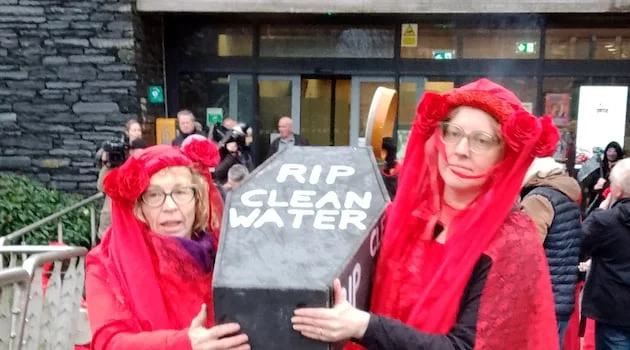
From 1948 to 2001, Fresh Kills—the world's largest landfill—occupied a marshy stretch of Staten Island's western shore. Daily, garbage from New York's other four boroughs arrived by barge and was dumped, compacted, and left to decompose in mounds that eventually towered higher than the Great Sphinx. The stench drifted for miles, seeping through car windows and into homes. Vito Fossella, born on the island in the nineteen-sixties, recalls the smell hitting him like a physical barrier. As a child running errands to the mall, he'd sprint from the parking lot to escape the air. "Every single day, that stench," he said. "Seagulls everywhere."
The resentment lingered. "We had five per cent of the city's population and absorbed a hundred per cent of its garbage," Fossella, now Staten Island's borough president, told me. "We were dumped on—literally and figuratively—and the rest of the city shrugged." Fresh Kills finally closed in 2001 under Mayor Rudy Giuliani, who had edged out David Dinkins in the 1993 election largely thanks to Staten Island voters. (Giuliani also eliminated the Staten Island ferry fare.) That same year, islanders voted in a nonbinding referendum on whether to remain part of New York City. Sixty-five per cent said they'd rather leave.
Now, the secession impulse has returned. Just before Christmas, Sam Pirozzolo, a Republican state assemblyman representing parts of western and central Staten Island, drafted a declaration of independence modelled on the 1776 original. He read it aloud at the former site of a tavern where British soldiers first heard the national document. Andrew Lanza, a Republican state senator, has introduced legislation that would enable the borough to break away.
Officially, this renewed push stems from Zohran Mamdani's election, which Pirozzolo cites as proof that New York City no longer represents Staten Island's values. But the grievance is older and deeper. Staten Islanders have attempted secession at least six times. In 1900, just two years after the modern City of New York was consolidated, two hundred residents gathered at a public hearing to declare themselves "ready to cede." One man told the Chicago Tribune's New York bureau that Staten Island "is the Ireland of Greater New York. We want home rule."
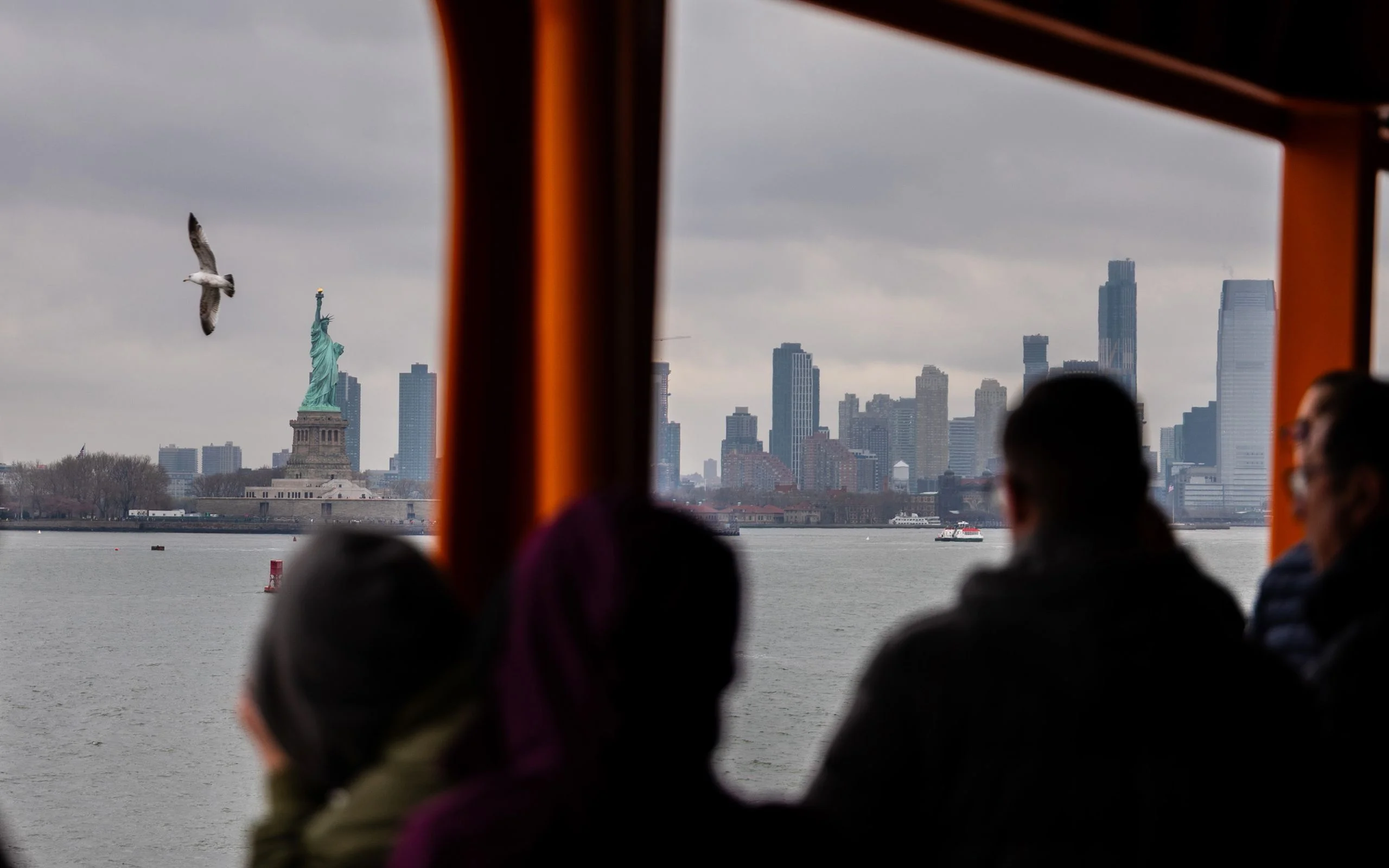
The borough remains distinct: wealthier, more suburban, more conservative, more car-reliant, less dense, and separated from the rest of the city by the deep waters of New York Harbor. Many islanders feel ignored by City Hall and resent funding initiatives they never asked for.
Staten Island backed Donald Trump by thirty points in 2024. That margin reflects years of mounting frustration with City Hall. Residents have rallied against migrant shelters, speed cameras, marijuana dispensaries, and battery-storage facilities—all imposed, they say, without local input. Fossella recounted one particularly galling example: a metal fence that appeared overnight on a stone wall in Clove Lakes Park, installed by the Department of Transportation because the site bordered a waterway. "If Staten Island were a separate city, that would never have happened," he said. Then there's the matter of a performing-arts high school—every other borough has one. "It's almost like that movie—they're just not into us anymore," Fossella said. In the nineties, the city invoked home rule to block secession, requiring approval from the mayor and City Council before Staten Island could leave.
Giuliani refused. The backlash was fierce. In 1995, an Oakwood resident wrote to the Staten Island Advance, comparing the arrangement to "the Anschluss that joined Austria to Germany in 1938, with some overtones of the later occupation of Czechoslovakia." Pirozzolo put it more bluntly: "If we vote to leave, keeping us would be indentured servitude or slavery. You pick."
Is there merit to the secessionist case? Howard Husock, who studies secession movements at the American Enterprise Institute, thinks so. "Geographically, it's really part of New Jersey," he said. The real issue, though, isn't about Mamdani or partisan grievances—it's about local control. Under the proposal, Staten Island would become an independent city within New York State, managing its own zoning and school boards. That autonomy, Husock said, would appeal to residents who want a say in curriculum and development.
Nearby communities—Montclair and Bergen County in New Jersey, Manhasset on Long Island, Westchester north of the Bronx—share Staten Island's demographics and govern themselves. "They look out over the water and see them," Husock said. "They see the suburban Montclairs of the world, and they say, 'Wait a minute, they get to call the shots in their own communities, and we don't.'"
What would independence actually look like? An independent Staten Island would instantly become New York State's second-largest city, with nearly half a million residents. Most bus routes would remain intact—the M.T.A. is state-run, and Staten Island sits within the Metropolitan Transit District. "They're not seceding from that," Husock noted. The ferry, however, is a city operation. It would likely continue running, but the free ride might end.
Taxes could rise, though that might not bother voters. An independent Staten Island could tailor its tax structure to fund the services residents actually want. A 2024 Independent Budget Office report estimated a budget shortfall of at least $170 million. The island would also lose access to New York's economies of scale, forcing it to renegotiate contracts with providers like Spectrum and Verizon.
Schools, fire departments, sanitation, hospitals, snow removal—all would fall to the new city. But Fossella isn't worried. "Buffalo is a city!" he said. "It's smaller than Staten Island. So clearly it can be done. It's not like it's the end of the world."

Policing presents a thornier problem. Paul Costello, a lifelong Staten Islander who worked on the Mamdani campaign, pointed out the irony: the Republicans driving secession would lose the N.Y.P.D., one of the world's best-funded police forces with a $5.8 billion annual budget. "For a pro-police person, they have everything they want right now," he said. "They're basically saying they want to kneecap them, which, hey, I'm all for. But it doesn't really make sense."
Husock sees Yonkers as the model. The predominantly white, working-class city of 200,000 runs its own police, fire departments, and schools while staying connected to New York via Metro-North and buses. It's governed by center-right Democrats. "I think they have Yonkers envy," Husock said. "They're not going to become Scarsdale, obviously, but they would become Yonkers."
Costello disagrees. "It's not a good idea," he said. Being part of New York City means "we get literally the best services available to anyone in the country." Secession, he argued, isn't grounded in financial reality. "It's an old feeling, but it's not founded in financial literacy."
Costello, thirty-one, grew up on the north shore and now lives in St. George near the ferry. "I love Staten Island with all my heart," he said. But the recurring secession debates feel like reliving the Civil War. "It's like I'm a guy on the border between the Union and the Confederacy. And I'm like, 'No, I'm part of the fringe that lives here that actually agrees with the North.'"
I asked Husock why the same logic couldn't apply to every borough. "I would make that argument for every neighborhood," he said. "The logical policy extension of Staten Island secession is deconsolidation of New York City." Boroughs could fracture into smaller municipalities, each governing itself while sharing certain metropolitan services. "It's really a thought experiment," he admitted. "But Staten Island is forcing the thought experiment."
Brooklyn once resisted consolidation, too. In the nineteenth century, Brooklyn and Manhattan were rival cities competing for control of East River shipping lanes. When consolidation went to a vote in 1894, Brooklyn approved it by just 250 votes. A group of Brooklyn politicians then filibustered the measure in Albany for years. Staten Island, meanwhile, voted overwhelmingly for consolidation—seventy-eight percent in favor. Yonkers voted no. Queens approved joining by sixty-two percent, and the Bronx had already been annexed in 1895.
Who would benefit from a breakup—Staten Island or New York? No one really knows. The 2024 I.B.O. report relied heavily on studies from the nineties. Fossella announced in 2023 that he was commissioning a new economic analysis, but nothing has materialized. "We've put out feelers for entities that could do it," he said. "They have to get back to us."
I met Pirozzolo, the author of Staten Island's declaration of independence, in a quiet, carpeted room at the College of Staten Island archives. He wore a blue suit and a tie patterned with green and blue diamonds. James Kaser, a librarian in glasses and a blue polo, wheeled in a stack of boxes containing documents from the 1993 secession effort—financials, committee reports, white papers. The college holds one of the largest collections of materials from that campaign. "We typically go one box at a time," Kaser said.
Pirozzolo was laser-focused on his search. "I need something that spells it out: 'New York City Police Department. One million dollars. Includes A, B, C, and D,'" he explained. His chief of staff, Nick Robbins, dressed in a vivid blue New York Giants jersey, produced a thick folder crammed with documents. Among the papers: "Staten Island Secession: The Price of Independence" and the original secession legislation. "Bingo!" Pirozzolo exclaimed. Digging deeper, they uncovered a chart comparing 1991 municipal budgets from cities nationwide—Atlanta, Austin, Denver. "This is perfect," Pirozzolo said. Another document detailed Staten Island's local expenditures by department during the 1990s: education, health services, libraries, sanitation—essentially everything a self-governing city requires. Pirozzolo's finger moved down the page as he read aloud quietly. "Mental health, parks. This is exactly what we need," he said.
Kaser returned carrying another stack of booklets. "Now that I understand what you're after, there's plenty more of this," he offered. "That looks ancient!" Pirozzolo responded. "I'm not sure I should even handle it." Kaser corrected him: "It's not ancient. It's from the nineties." Pirozzolo held up "The Price of Independence." "Can I put this in a briefcase or something?"
A spokesperson from the Fiscal Policy Institute explained that Staten Island probably doesn't contribute more to city coffers than it receives. His analysis suggested the borough generates roughly 3.4 percent of New York City's revenue while consuming approximately 5.2 percent of municipal spending.
Despite his extensive research, Pirozzolo remains far from calculating what independence would cost in today's dollars. Still, he noted progress: "Now when I approach the city budget and request these figures, at least I know exactly what to ask for."
Staten Island carried the official name Richmond until 1975, honoring the title given to King Charles II's youngest illegitimate son. (The king fathered at least twelve.) That sense of separation persists. "The forgotten-borough narrative has always been there," Costello, who worked on Mamdani's campaign, explained.
At the June mayoral primary debate last year, Democratic candidates faced a revealing question: which borough had they visited least? One after another—Adrienne Adams, Andrew Cuomo, Brad Lander, Mamdani, Zellnor Myrie, and Whitney Tilson—answered to mounting laughter: "Staten Island." Costello watched from a bar with friends. Asked about his reaction, he said, "I wouldn't have expected different answers. It's almost predictable. But sure, it stings a bit. You think, 'Come on, really?'"
Growing up, Costello's high school sat adjacent to the notorious dump. Walking from the bus to class, he could see it looming behind the campus. But he also witnessed its transformation. Over two decades, the landfill has been gradually rehabilitated, restored to nature, and reimagined as parkland. Now called Freshkills Park, it will become one of the city's largest green spaces—almost three times Central Park's size—when finished in 2036. One of Costello's friends now works there as a field educator, leading tours. Birds have begun returning. Perhaps because of this evolution, Costello doesn't carry the same resentment as older Staten Islanders. "Honestly, it's kind of funny that my high school was next to a dump," he said. "And as they restored it, it actually became beautiful."
Since the campaign, Mamdani has increased his Staten Island presence: dining at Shaw-naé's House, a local soul-food establishment, and attending evening prayers at a Dongan Hills mosque during Ramadan. In early March, he announced a significant child-care expansion—extending 3-K programs—at a north shore pre-K facility. (Staten Island had been omitted from an earlier 2-K rollout.) That same month, Democrat Allison Ziogas launched a challenge against Republican Congresswoman Nicole Malliotakis, positioning herself as a pro-labor economic populist. Both parties had failed the borough for generations, Ziogas argued in her campaign kickoff. "People dismiss Staten Island as if we have nothing valuable," she said. Originally from Connecticut, Ziogas added, "I describe myself as a Staten Islander by choice and by love."
"I'm among the borough's strongest advocates," Costello told me. "We have exceptional restaurants, remarkable people, and more parkland than anywhere else in the city." (Staten Island boasts some of New York's finest Sri Lankan cuisine.) The only scenario that would drive him away? If other residents actually succeeded in leaving New York City. "Contemplating departure isn't easy," he said. "The only reason I'd ever leave is because so many others want out. It's not that this isn't a wonderful place to live."