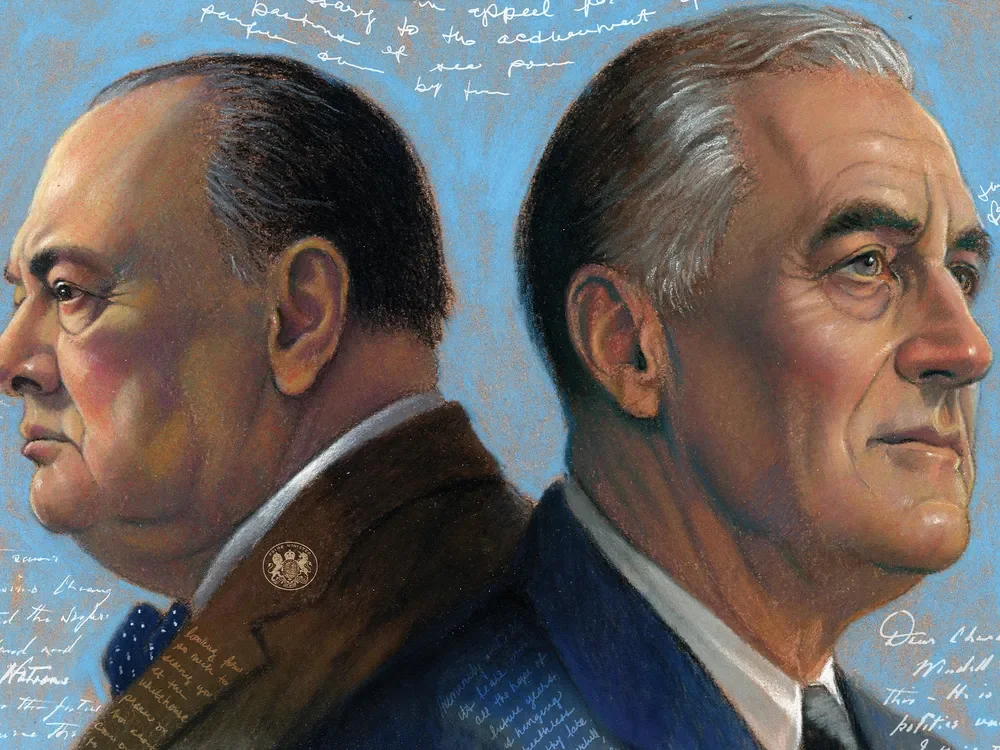
On the morning of December 10, 1941, Winston Churchill finished his massive breakfast in bed at No. 10 Downing Street, as was his custom, and opened his red box of official business. The telephone at his bedside rang. Admiral Dudley Pound, the first sea lord, was calling, but Churchill could not quite hear what he was saying. “His voice sounded odd,” Churchill later wrote. Then the words came clearly: The Japanese had sunk both the battleship Prince of Wales and the battle cruiser Repulse in the South China Sea, where the ships had been tasked with securing Britain’s Far East interests. “We think by aircraft,” said Pound. He also told Churchill that Tom Phillips, the task force commander and a close friend of the prime minister, had drowned. “Are you sure it’s true?” asked Churchill. “No doubt at all,” the admiral said.
One of Churchill’s personal secretaries, Kathleen Hill, sat in the corner, trying, as she always did when the prime minister was upset, to be invisible. Churchill put down the phone and was now twisting in bed. “Poor Tom Phillips,” he moaned, and for the next two days, when he thought no one was watching, he wept and mumbled to himself, “I don’t understand what happened. I don’t understand.”
As first lord of the Admiralty in two world wars and now as prime minister, Churchill loved battleships. He counted on these magnificent “castles of steel,” as he called them, to secure Britain’s centuries-long mastery of the seas. They “can catch and kill anything,” he regularly boasted. But Churchill was mourning more than the loss of a friend and two capital ships.
When, just three days before, Japan had attacked the American naval base at Pearl Harbor on December 7, bringing America into the war, Churchill had felt immensely relieved. Years later in his memoirs he would write that on that night, he “slept the sleep of the saved.” His relief, as it turned out, was premature. For months, the British prime minister had been imploring U.S. President Franklin D. Roosevelt to ask Congress for a declaration of war on Germany. But on December 8, the morning after Pearl Harbor, Roosevelt asked Congress to declare war against Japan—not, to Churchill’s alarm, against Germany as well. Now, with the sinking of Britain’s two great warships in the Pacific, the British crown colonies of Hong Kong and Singapore were exposed to Japanese attack. And Churchill still had no assurance that the United States would join Britain in the battle against Nazi fascism.
As always, the prime minister collected himself. He knew that he must rise and do his duty. Before lunch, Churchill addressed a sullen and worried House of Commons. One of his more biting critics, the American-born Conservative Member of Parliament Henry Channon, was unsparing that night in his diary:
A dreadful day of despair and despondency. The prime minister stalked into the House and seemed anxious to speak. ... He announced the sinking of both the Prince of Wales and the Repulse at Malaya. A most shattering blow for our Pacific fleet and naval prestige. ... A wave of gloom spread everywhere.
Churchill’s first stop after the gloom in Parliament was to see the U.S. ambassador, John Winant. Churchill wanted to travel across the Atlantic to plead with Roosevelt face-to-face not to devote all of America’s resources to fight Japan. Right after the Pearl Harbor attack, Washington suspended its lend-lease program supplying war materials to Britain. Now the prime minister worried that, along with its two magnificent frontline warships, Britain might lose the crucial munitions and supplies it needed from America to keep fighting. Churchill put on his bulldog face. The dire news of the sinkings of Britain’s main warships in the Pacific, he told Winant, was even more reason for Churchill and Roosevelt to meet and plan the way forward—and to do it right away. As Winant knew, what Churchill really wanted, and what still eluded him, was a declaration of war by America against Germany.
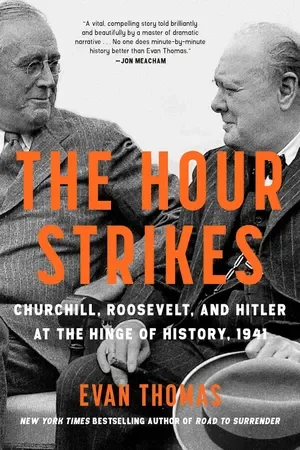
The Hour Strikes: Churchill, Roosevelt and Hitler at the Hinge of History, 1941
Historian Evan Thomas vividly takes readers into the war rooms of Roosevelt, Churchill and Hitler as they redefined the world.
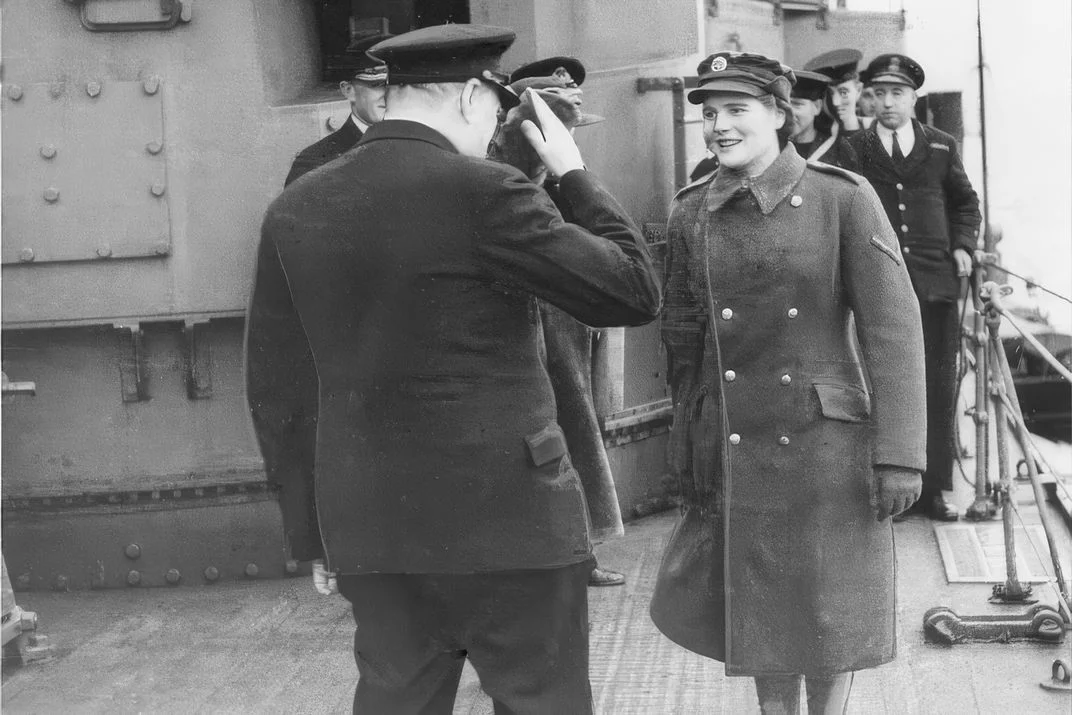
The U.S. ambassador was deeply sympathetic to Britain and personally close to Churchill. (He was also having an extramarital affair with Churchill’s daughter Sarah.) In his report back to Washington, Winant did his diplomatic best to dress up Churchill’s desperation, saying that “discouragement seems only to give him new courage and add to his determination.” Churchill’s courage was real; there was no other virtue that he prized more, especially in trying circumstances like the loss of the Prince of Wales. His army chief of staff, General Alan Brooke, noted in his diary that the prime minister had “stood [the] shock well.” But Brooke also observed that Churchill was “fretting” at Roosevelt’s delaying tactics.
The American president was, as usual, biding his time. With one eye, Roosevelt was warily watching Congress and especially the non-interventionist America First movement and its champion, the hero aviator Charles Lindbergh, who had dropped their opposition to America going to war with Japan, but fighting Germany was another matter. The popular Senator Hiram Johnson, a devout isolationist from California, had used his power as ranking Republican on the Foreign Relations Committee to halt legislation intended to prepare an American Expeditionary Force for action in Europe within the next two years. (Johnson told his son that he had at least ten other senators on his side.)
The day before, Roosevelt put off Churchill’s proposal to come to America by suggesting that the voyage through U-boat-infested waters was too dangerous. On the evening of December 10, Churchill brushed aside any temporizing. In a secret cable, he wrote Roosevelt, “We do not think there is any serious danger about return journey. There is, however, great danger in our not having a full discussion on the highest level about the extreme gravity of the naval position [the sunken American and British ships], as well as upon all the production and allocation issues involved [lend-lease, now on hold]. I am quite ready to meet you at Bermuda or to fly from Bermuda to Washington. I feel it would be disastrous to wait for another month.”
In Washington, where it was just after lunch, Roosevelt continued to stall. He, too, had been shocked by the British setbacks in the Far East, and he wished both to commiserate with Churchill and to keep his distance. Summoning his secretary Grace Tully, he began to dictate a message using Churchill’s favorite appellation, “For Former Naval Person from the President:”
I would like to suggest delay in decision reference to conference until early stages of mobilization complete here and situation in Pacific more clarified. ...
He finished drafting the message, but he didn’t send it. He knew that Churchill was deathly afraid that America would mobilize all its resources to fight Japan and abandon its “Germany First” strategy, which had been settled on almost a year earlier. More recently, it was fleshed out in a planning document, the Victory Program, which called for an invasion of Europe by five million American men in 1943. Roosevelt himself had not abandoned Germany First. He said as much in his “fireside chat” radio address just the night before, even telling Americans that Adolf Hitler was the true instigator of the Pearl Harbor attack. Roosevelt believed that the gravest threat to world freedom was from Nazi Germany, not Imperial Japan. But he was leery of getting ahead of Congress and inadvertently fanning the embers of America First, which seemed to be rapidly evolving into Japan First.
Roosevelt summoned Tully and started over:
I know you understand why it is impossible for me to leave Washington until January sixth. We are in the throes of mobilization and the preparations for the new Congress ...
He didn’t send that draft, either. Instinctively, he was waiting for a sign, some indication of what Hitler intended to do. Would Hitler join the fight on the side of Japan? American code-breakers had been reading Japan’s diplomatic cables, and they suggested that Germany would be willing to support Japan in a war against America. If Hitler declared war, then Roosevelt would not need to be the one to persuade Congress. Hitler would have done it for him.
Did you know? A secret at sea
-
Months before the December 1941 attack on Pearl Harbor, Roosevelt and Churchill held a secret meeting of alliance.
-
In August, the leaders drafted the Atlantic Charter, an agreement outlining how the world would look after the war was won.
-
Churchill and Roosevelt conducted their business on a warship, anchored in Canadian waters.
A report from Roosevelt’s chief of intelligence, Colonel William Donovan, arrived that afternoon confirming Roosevelt’s hunch. It stated that the German government had told a German newspaperman working in Washington to leave as soon as possible for Europe or South America, because Germany was about to declare war on the United States. Though he was not privy to Hitler’s thoughts, the German newspaperman recited to Roosevelt’s spymaster the führer’s doomed logic: “Germany would rather declare war on the United States than wait for the United States to declare war on her—this for the reason that she wishes to show her people her internal strength.”
Then, shortly before 6 p.m. came official word from the German government that Hitler would make a major address the next day. Some American news accounts, lacking Roosevelt’s intelligence sources but feeding off rumors, speculated that Hitler had summoned his government to declare war on America.
The hour was striking. At 6:30 in the evening, Roosevelt asked Tully to take a message:
For Former Naval Person from the President:
Delighted to have you here at the White House ...
During the early afternoon of December 11, crowds began to gather outside the Kroll Opera House, near the burnt-out Reichstag building in the heart of Berlin. Dignitaries had gathered from the far reaches of the Reich to hear Hitler’s speech. There was Norway’s prime minister, Vidkun Quisling, whose name was becoming synonymous with “collaborator,” and Amin al-Husseini, the former grand mufti of Jerusalem. An honor guard of the panzer division Leibstandarte SS Adolf Hitler, an elite SS unit formed from Hitler’s bodyguards, arrived in their all-black uniforms with silver SS lightning bolts pinned on their collars. They awaited the SS commander, Heinrich Himmler, who designed their showy uniforms. Always attentive to detail, Himmler had gone to the hairdresser the day before.
As Nazi officialdom arrived at the opera house, Foreign Minister Joachim von Ribbentrop was still at his office on Wilhelmstrasse, where he had summoned the American chargé d’affaires, Leland Morris. At 2:15 p.m., Ribbentrop read a statement declaring that “Germany, too, as from today, considers herself as being in a state of war with the United States of America.” With an operatic touch, the foreign minister concluded his presentation by telling the American diplomat, “Your president wanted war. Now, he has it.”
In Washington, meanwhile, the German chargé, Hans Thomsen, was kept cooling his heels for 90 minutes at the U.S. State Department before he could deliver the same message to a midlevel official, who was finally sent out to the waiting room to receive him. Emerging from the building into a chilly, overcast December morning, Thomsen, who had requested safe passage home to Germany, turned to the gaggle of reporters and inquired, “Anybody want to buy a nice car?”
Back in Berlin, just before 3 p.m., Hitler and Himmler arrived in a massive Mercedes-Benz limousine. Hitler inspected the honor guard while a band played the “Horst-Wessel-Lied,” the marching song that was the Nazi Party anthem. Hitler chose to address the nation in midafternoon so his speech could be heard both in Japan, where it was 11 p.m., and Washington, where it was 9 a.m.
At the podium, Hitler stood before a giant gold eagle clutching a swastika in its claw. His tone was somber but self-righteous. “The American president and his plutocratic clique have mocked us as the ‘have-nots,’” he said. “That is correct!” He went on to contrast himself with Roosevelt. The American president came from “a rich family.” Hitler came from nothing. While Roosevelt avoided military service in World War I, Hitler was an “ordinary soldier.” But now the Reich, the people and their führer were one and the same, locked in a relentless but ultimately victorious struggle against communism, capitalism and—always—“the eternal Jew,” a term popularized in a Nazi propaganda film.
A journalist from neutral Sweden, Arvid Fredborg, was watching and taking notes. The officials from the Foreign Office and the Propaganda Ministry were, he reported, applauding, but mechanically, ritualistically. Some appeared uneasy, glancing at each other when Hitler “screamed out his hatred for the American president—the ‘cripple’—and his wife.” During one round of orchestrated applause, Fredborg looked down a line of field marshals, generals and admirals and saw “not a single hand move.”
After 90 increasingly histrionic minutes, Hitler declared war on America and left the building. “Sieg Heil!” shouted the Reichstag deputies.
All day long, a trainload of 1,000 Jews made its way across Germany, headed eastward, into the conquered lands of Eastern Europe, to slave factories and crematoria. The “transport” began in the rain at 4 a.m., after the Jews were herded from a slaughterhouse in Düsseldorf, where they had been rounded up for the night, into the railroad boxcars that would take them ... where? They were not told.
The world was now officially at war. The Allies (the United States, Britain and its Commonwealth, China, and the Soviet Union) arrayed against the Axis (the German and Japanese Empires, Italy, and their various vassal states) in the largest and deadliest conflict in the history of mankind.
In Washington, hours after Thomsen delivered Germany’s declaration of war on America, Roosevelt did not mention Hitler’s name when he sent a message to Congress calling for war with Germany. Congress needed no persuasion. Not even the determined pacifist Jeannette Rankin of Montana voted no; instead, she voted “present.” At its Chicago headquarters, the America First organization officially dissolved.
This was the moment that Roosevelt had been patiently waiting for and, sometimes secretly, planning for. To be sure, he had taken important steps on the road to war, authorizing massive ship-building programs, including the creation of a “two-ocean navy”; enabling conscription and directing American military planners to meet clandestinely with their British counterparts. In a move little remarked upon at the time, in June 1941, he had signed an executive order banning racial discrimination by defense contractors, opening the way for the assembly lines in Detroit to be integrated. But, always, Roosevelt had been mindful of political reality, that an American president cannot get too far ahead of his people.
Now, the equivocations were over. The mighty American industrial base would go to work, around the clock, making more tanks, planes and ships than Germany and Japan could dream of. Their fates were sealed.
In London, one of Churchill’s private secretaries, John Martin, wrote in his diary, “The stars in their courses are fighting for us.” He was quoting Churchill quoting the Bible (Judges 5:20: “They fought from heaven, the stars in their courses ...”). Another private secretary, John Peck, wrote a friend that despite the loss of the Prince of Wales, Churchill was “full of bounce again.”
Still, for all the giddiness at No. 10 Downing Street that America was finally in the fight, the mood in Parliament earlier that day had been oddly subdued, Harold Nicolson, a junior minister, wrote his wife. “We simply can’t be beaten with America in,” he wrote. “But how strange it is that this great event should be recorded and welcomed here without any jubilation. We should have gone mad with joy if it had happened a year ago. ... Not an American flag flying in the whole of London. How odd we are!”
Londoners, perhaps, were a little resentful that the Americans had stayed out of the fray for so long while they suffered. They also knew that the suffering was far from over. Churchill had told them so in a speech to Parliament that morning, warning of “heavy punishment” ahead.
On December 12, Churchill gathered with most of his military service chiefs of staff and his secretaries, a party of 38 people, on a train platform at Euston Station in London. The cover story was that they had come to see off Max Aitken, the minister of production, on his way to Scotland to board a ship for Washington. Actually, they were all going across the ocean. It had taken Churchill less than 24 hours from the time he received Roosevelt’s message—“Delighted to have you here at the White House”—to gather his entourage for the perilous voyage to America, scheduled to take seven days zigzagging through U-boat hunting grounds at 20 knots.
Churchill was in a puckish mood. When one of his military chiefs warned him to be cautious about asking things of the Americans, his face lit up with a wicked leer. “Oh, that is the way we talked to her when we were wooing her,” he said. “Now that she is in the harem, we talk to her quite differently.”
The battleship carrying Churchill and his party was the Duke of York, the brand-new sister ship of the late Prince of Wales. The Admiralty sent the Duke of York from Scotland down through the Irish Sea across shipping lanes patrolled by German bombers flying out of bases on the west coast of France. Stepping out on the bridge, Churchill saw “unwelcome blue sky” through the clouds. He could not help but think of the hard-learned lesson of air power and the fate of the Prince of Wales.
It was winter, and the North Atlantic raged. Giant waves crashed over the bow. Everyone was trapped in stuffy compartments below deck. Churchill took an extra dose of Mothersill’s Travel Remedy to fight off seasickness and, in a long letter to Clementine, his wife, he paraphrased the 18th-century writer Samuel Johnson: “Being in a ship in such weather as this is like being in a prison, with the extra chance of being drowned.” Aitken joked over dinner, which had few takers, that he had never traveled in such a large submarine.
The weather was so bad that the Duke of York’s destroyer escorts, tossed about like bathtub toys, could not keep up. The battleship pressed on alone. In the dark storm-tossed night, the captain assured Churchill that the ship was more likely to ram a German U-boat than be sighted and sunk by one.
In his tender letter to Clementine—“my darling”—with whom he freely discussed state secrets in a way Roosevelt never would with his wife, Eleanor, he worried about how he would be received by the Americans. “Oddly enough,” he wrote, “we have got practically nothing from the United States wireless. I do not, therefore, know the situation I shall find on arrival.”
For days, he lay in bed, reading cables about the uneven progress of the war and trying to restore his profoundly weary body. “The entry of the United States into the war is worth all the losses sustained in the East many times over,” he wrote his wife. But the sinking of the Prince of Wales and the imminent fall of Hong Kong were “painful to endure and will be very hard to repair.” At sea, the storms raged on. “It is still blowing hard, and from my porthole I can see, every minute, tremendous seas pouring over the bows of the ship,” he wrote.
Still, he made the most of his passage. He drafted long memos on strategy for his chiefs of staff, as well as for Roosevelt and Joseph Stalin, the Soviet dictator who had become an ally in June when Hitler invaded Russia; he read a novel about a naval hero; and, his sea legs under him, he prowled the passageways. At night there were melodramatic movies to watch. He was enthralled by The Sea Hawk, a 1940 swashbuckling adventure film starring Errol Flynn that was lightly disguised pro-British propaganda. Dressed in his beloved silk dressing gown, festooned with Chinese dragons, the prime minister jumped from his chair before the makeshift movie screen when the underdog English seamen, circa 1600, rose up with swords and pikes against their Spanish oppressors. “We’re winning! We’re winning!” Churchill cried.
On December 22, two days behind schedule because of the rough seas, the Duke of York put in at Norfolk, Virginia. The plan had been to steam up the Chesapeake Bay and then travel along the Potomac River to Washington. He had wanted to make a grand entrance to show that the Royal Navy might have lost the Prince of Wales, but there would always be a Duke of York to replace the fallen. But Churchill was in too much of a hurry. He commandeered a two-engine Lockheed plane at the American Navy base. After flying through the darkness for three-quarters of an hour, the British visitors saw the lights of the American capital all ablaze. (There were blackout curtains at the White House and a few other federal buildings, but nowhere else.)
After the gloom of blacked-out London, they were deeply moved. “One of the most beautiful sights I have ever seen,” John Martin wrote in his diary. Churchill’s aide-de-camp, Commander Tommy Thompson, could not get over the “amazing spectacle of a whole city all lighted up.” Thompson wrote, “Washington represented something immensely precious. Freedom, hope, strength. We had not seen an illuminated city for five years. My heart filled.”
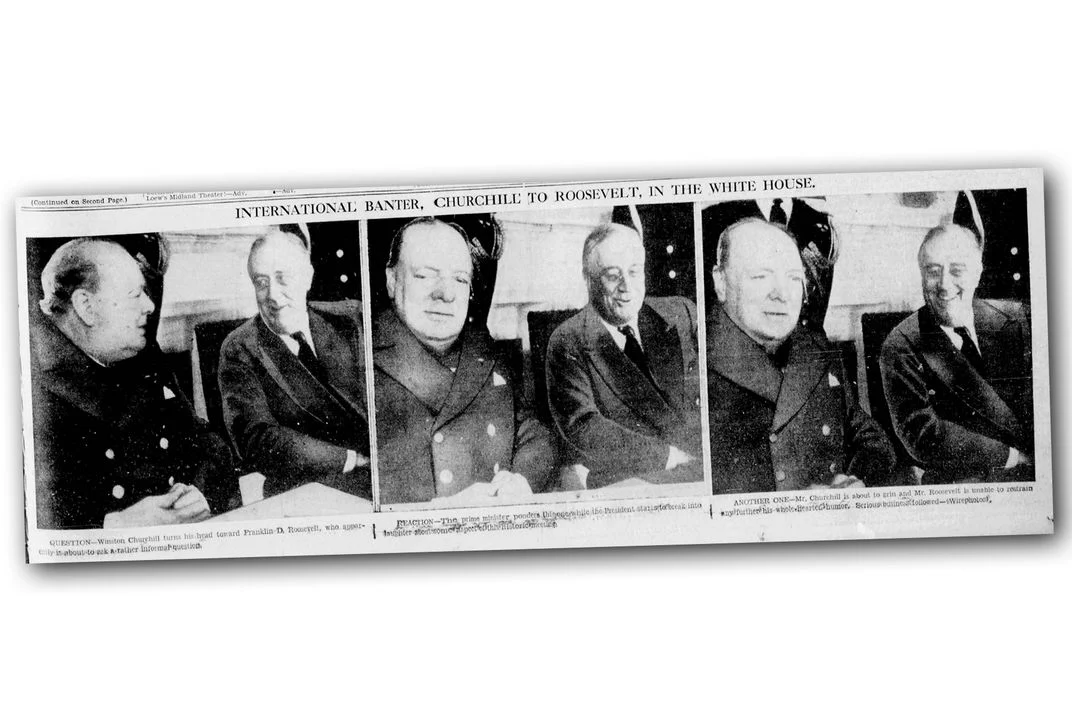
When the plane landed, a tall man greeted them: Franklin D. Roosevelt. Churchill would write in his memoirs, “I clasped his strong hand with comfort and pleasure.”
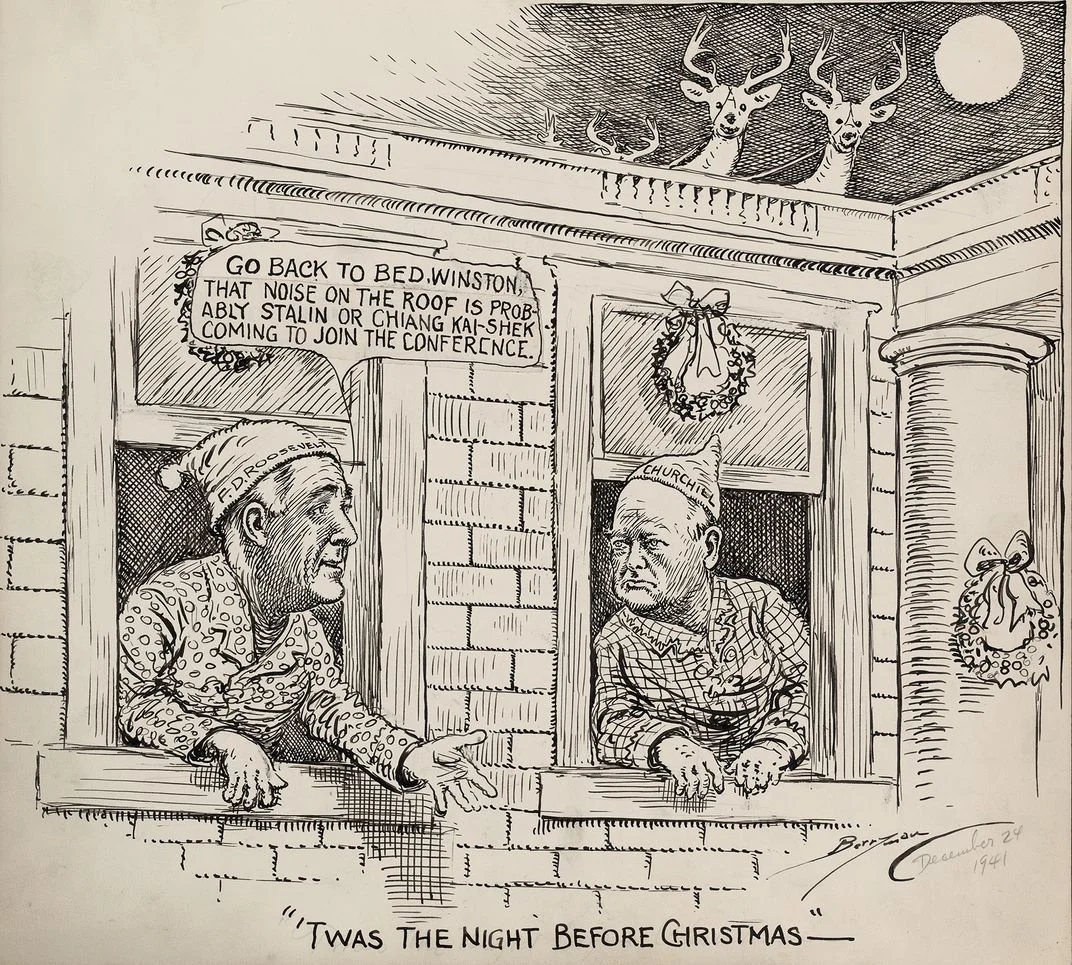
First lady Eleanor Roosevelt was understandably annoyed at her husband, who had not told her until that very morning, December 22, that the prime minister of Great Britain was coming to America and would be staying at the White House. In the December 24 installment of her confiding and chatty syndicated newspaper column, “My Day,” she complained to her millions of readers. In any event, he knew, based on long experience, that she would rise to the occasion.
The news of her houseguest’s imminent arrival made Eleanor late for her appointments. Always, she was in a hurry. After a morning press conference, she headed to the Salvation Army, then to the American Committee for British Catholic Relief and finally to a tree lighting sponsored by the Washington Federation of Churches. At 6:15 p.m., she was back at the White House to welcome the prime minister.
He was not an easy guest. In the morning, with his bare feet sticking out from his long underwear, the British prime minister addressed the president’s butler, Alonzo Fields. “Now, Fields,” he began, in a friendly way but leaving no doubt about his needs: “One, I don’t like talking outside my quarters; two, I hate whistling in the corridors; and three, I must have a tumbler of sherry in my room before breakfast.” He went on, asking for Scotch and soda before lunch, and champagne and 90-year-old brandy before bed.
War had come, and the military delegations of both nations worked in concert night and day for the next three weeks. But it was the Christmas season, and time for one of Roosevelt’s favorite ceremonies, the Christmas Eve lighting of the National Christmas Tree. The president loved trees, and for many years he had been growing and selling Christmas trees at his estate in Hyde Park. He even identified his occupation as “tree farmer” when he registered to vote. He delighted in the annual ceremony, which he had moved from the Ellipse to the White House grounds to make it a more “homey” celebration. Notwithstanding Secret Service jitters, thousands of people passed through inspections at the gates to gather near the fence on the South Lawn, where the stately, live 30-foot spruce was decorated in red, white and blue lights. Watching from the South Portico of the White House, Eleanor stood with Churchill and Norway’s Crown Princess Märtha, a close friend of the president; Märtha’s young children; and her husband, Crown Prince Olav, whom Roosevelt had brought to Washington to spend Christmas with his family.
The president turned the switch, and the tree glowed with a thousand little bulbs. As the darkness of war pressed in, he asked the people throughout the nation to prepare their hearts and light their Christmas candles, conscious of the sacrifices ahead. (The tree was not lit again until December 1945.)
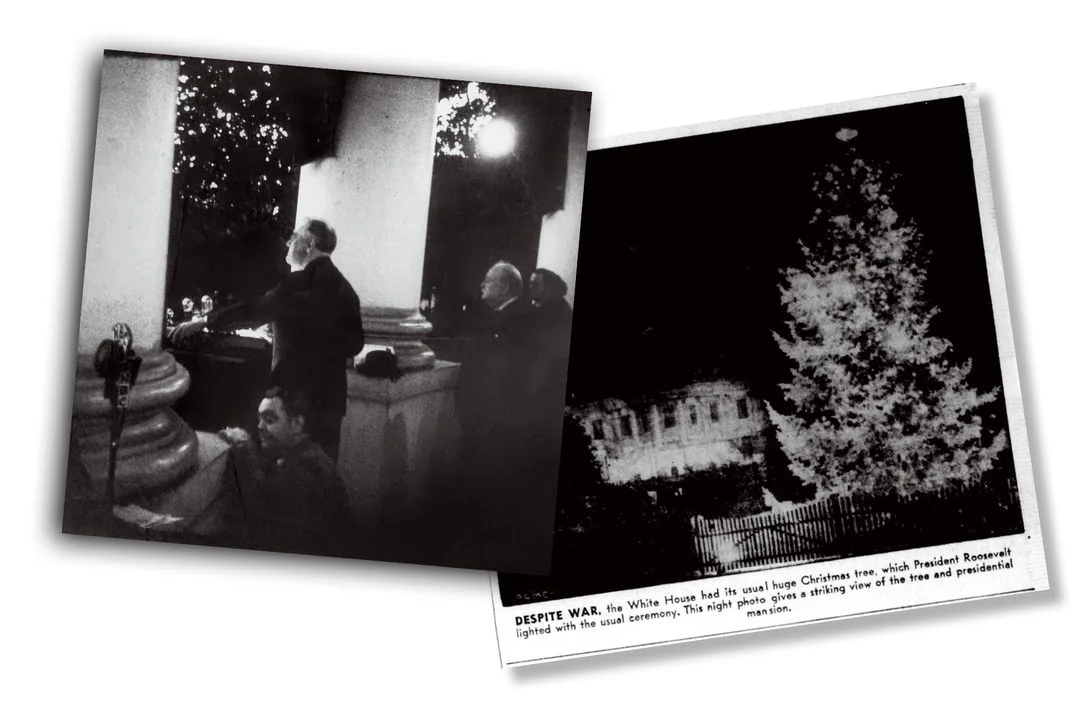
Then it was Churchill’s turn to speak.
“This is a strange Christmas Eve,” the prime minister noted. “Almost the whole world is locked in deadly struggle.” But it was still Christmas, a time for remembering the promise of love and peace. “Here, then, for one night only,” intoned the familiar bulldog voice, “each home throughout the English-speaking world should be a brightly lighted island of happiness and peace.” Recalling centuries of shared tradition, Churchill went on:
Let the children have their night of fun and laughter. Let the gifts of Father Christmas delight their play. Let us grown-ups share to the full in their unstinted pleasures before we turn again to the stern task and the formidable years that lie before us, resolved that, by our sacrifice and daring, these same children shall not be robbed of their inheritance or denied their right to live in a free and decent world.
Unfailingly, Churchill spoke of light against the dark. He had come from blacked-out London to the now bright-lit warmth of the White House portico with a message of hope. Churchill and the American president standing beside him, his withered legs straightened by steel braces, summoned the forces of light—for freedom from tyranny and for basic human decency. Across the ocean, Hitler stood for the forces of darkness.
Subscribe to Smithsonian magazine now for just $19.99
This article is a selection from the December 2026 issue of Smithsonian magazine
Indeed, in Hitler’s Germany that night, there was little sign of Christmas. Germans, denied their yuletide present-giving, were dutifully sending their hats, coats and woolens to soldiers freezing to death at the Russian front. As Hitler imagined the future, the only cross to be revered in the Reich would be the iron cross of Nazism. Fed lies about the splendors of National Socialism, the German people had to line up to buy rationed cigarettes. (Men got the equivalent of 1¾ smokes per day, women half that.)
In his nightly dinner rants, Hitler had spoken of a grandiose new civilization—its lands crisscrossed by gleaming highways—controlled by monumental party headquarters in a reimagined Berlin. Meanwhile, his nominal successor, Reich Marshal Hermann Göring, had been looting treasures from nations under the Nazi yoke. The week before Pearl Harbor, Göring had idled his time appropriating centuries of art from the Jeu de Paume in Paris, from the museums of Antwerp and Amsterdam, and from Jewish homes, for the Reich’s new museums but also for his hunting lodge. Later in the war, Göring would appear before guests dressed in a toga, as if he were a Roman demigod, instead of the failed chief of the Luftwaffe.
Hitler’s aides—Göring, Ribbentrop, Joseph Goebbels and all the rest—were, for all their swagger, small men obsessed with the trappings of power and greed. They were fated, by the laws of God and nature reaching back to antiquity, to self-destruct.
And yet destiny was not obvious in the moment. Just six months earlier, in July of 1941, it really had appeared that the Third Reich would take Russia, that the Empire of Japan would conquer Asia, that fascism would rule the world, or a good deal of it. In early December, Hitler’s tanks had reached the gates of Moscow while Japanese planes, ships and soldiers were marching and killing from Singapore to Honolulu.
Then, suddenly but inexorably, the tide turned.
Churchill spent three weeks living on the second floor of the White House in the Rose Room (also known as the Queen’s Bedroom), with his secretaries working across the hall in Abraham Lincoln’s private sitting room. “We live here as a big family,” Churchill wired Clement Attlee, head of the opposition Labour Party in England. Late into the wee hours, Roosevelt and Churchill smoked and drank and discussed the war. Eleanor gave Churchill a bit of knowing advice, born of experience: “You know, Winston, when Franklin says ‘yes, yes, yes,’ it doesn’t mean he agrees with you. It means he’s listening.” Her caution was understandable. The two men were partners, not yet true friends, and their journey would be long and winding and not without its setbacks and disappointments. But they had begun. Working together, officials from the two nations created a joint military command and began plotting the steps toward the liberation of Europe.
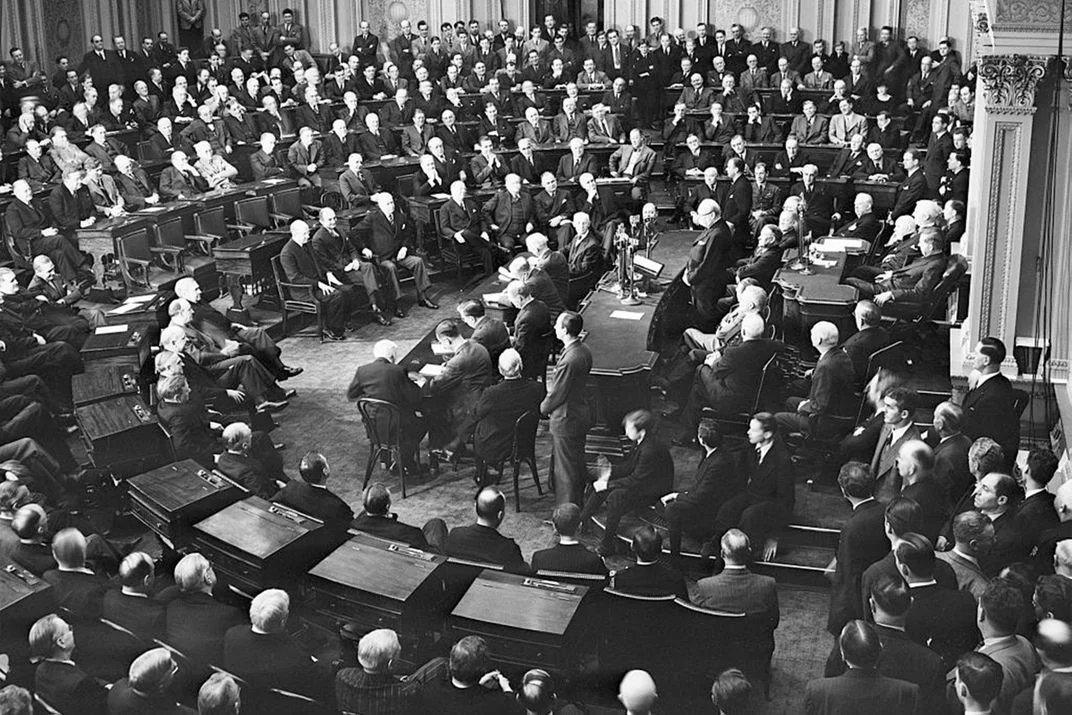
On the day after Christmas, Churchill addressed a Joint Session of Congress. He inveighed against the tyranny of the Nazis and the brutal aggression of the Japanese. “What kind of a people do they think we are?” he asked, indignant, his voice rising. “Is it possible they do not realize that we shall never cease to persevere against them until they have been taught a lesson which they and the world will never forget?”
It was a war cry, and the senators and congressmen roared their approval, raising their fingers in the V-for-Victory salute. But when Churchill asked What kind of a people do they think we are? he did not mean just fighters. His unspoken message was that they are also the kind of people who believed in a world that could be free and just, where its people were decent and good.
Adapted from The Hour Strikes: Churchill, Roosevelt and Hitler at the Hinge of History, 1941, by Evan Thomas and Oscie Thomas, published by Random House, an imprint and division of Penguin Random House LLC. Copyright © 2026 by Evan and Oscie Thomas.