On an unseasonably warm January afternoon, Duff Hallman's goats and sheep moved unhurried across the rocky hills of his ranch, 30 miles south of San Angelo, Texas. Long shadows swept the ground beneath them — cast by wind turbines rising 250 feet overhead, their blades turning steadily above land that has belonged to Hallman's family for four generations. From his backyard, Hallman can watch them spin. "It slows your pace down a bit," he said.
At 74, Hallman still considers it an honor to work the 9,200-acre ranch he owns with his brother and sister, sometimes logging 15-hour days. The work begins at dawn — mending fences, clearing pastures, tending horses and livestock — and has never been particularly profitable. He does it not for money, but out of gratitude to those who kept the ranch going before him. "Somebody worked their tail off to make it happen," he said. "And I have worked my tail off, too."
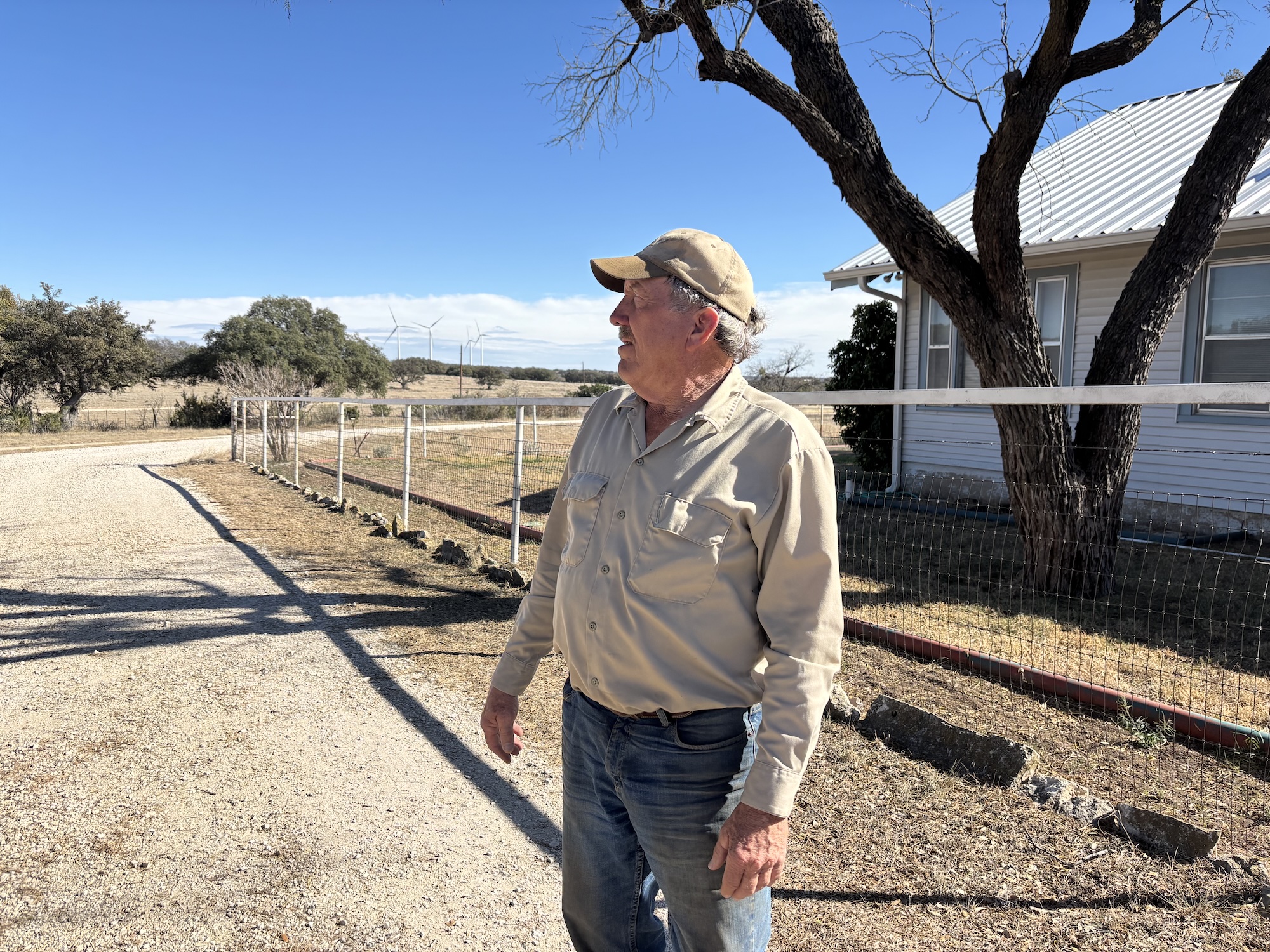
Standing beneath a live oak,
Bradley grew up in Eldorado during the 1960s and '70s, when the town was thriving enough to sustain multiple family-owned groceries, shops, and restaurants. He headed to Texas Tech University, where he sampled six different majors before landing on photography. ("Best seven years of my life," he said.) After coming home, he operated a portrait studio for a decade, then spent another 10 years chasing storms as an insurance adjuster. He was in the middle of one in 2007 when the retiring county judge called to suggest Bradley run for the position. Bradley protested that he knew nothing about governing. "Well hell, Bradley," the judge shot back, "Nobody does. If they did, they wouldn't run."
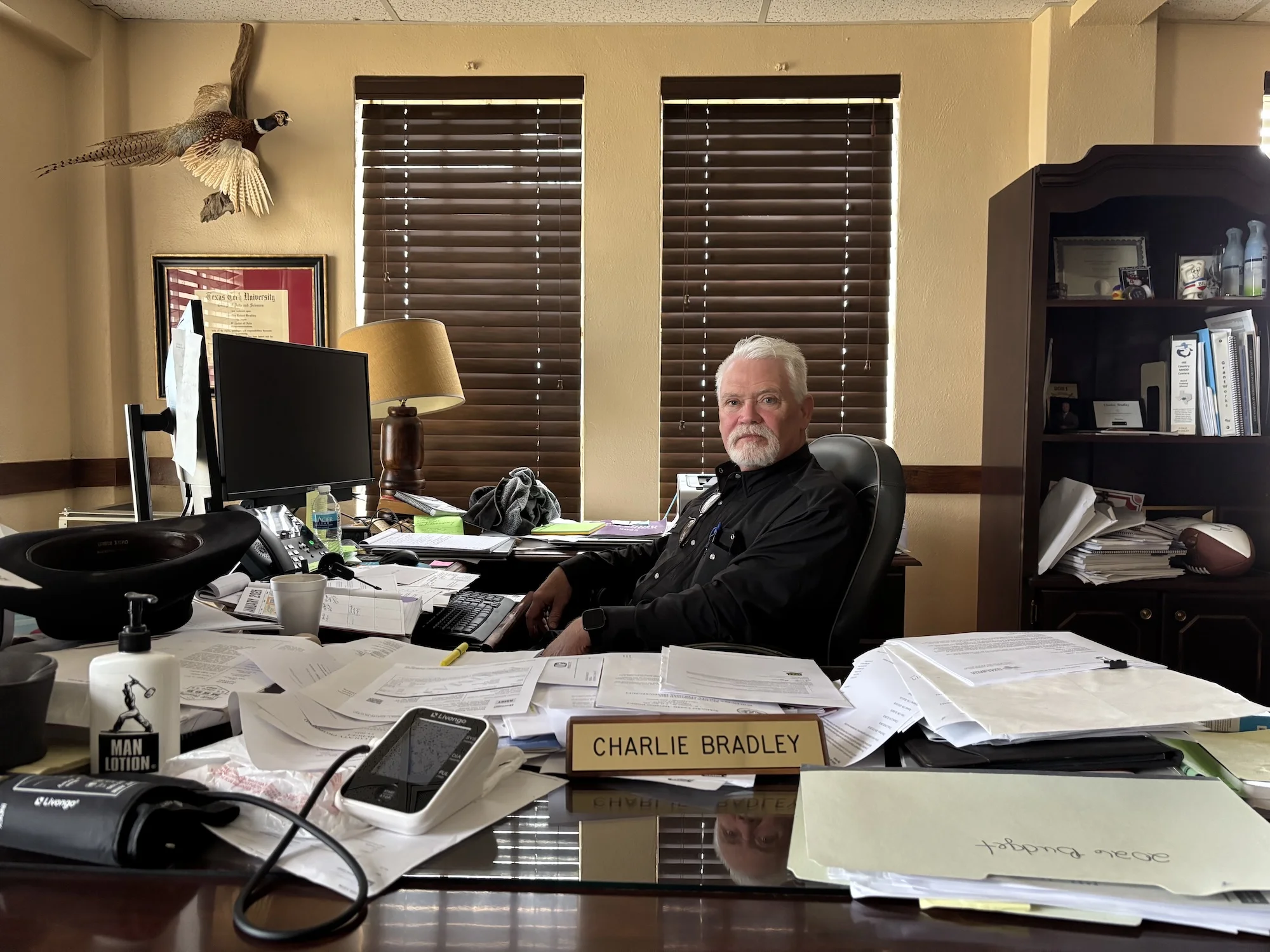
When Bradley took office in 2009, the county was already struggling from the decline of fossil fuels and sheep ranching. Then came additional setbacks. A fundamentalist Mormon sect that ranked as the county's fourth-largest taxpayer was prosecuted for child marriage and lost its property in 2014, carving a significant hole in revenue. The following year, the Baker Hughes oilfield services yard — which employed roughly 80 people — closed. With property taxes already near the legal ceiling, Bradley had to cut about $300,000 from the budget, slashing funding for roads, bridges, and a meals program for seniors. Most of what remained of the fossil fuel economy eventually departed as well, though a Kinder Morgan gas pipeline announced in 2019 has since bolstered the tax base. The population has dropped from roughly 3,500 in 2010 to about 2,300 in 2024.
Today, the county operates on $9.3 million. Resources are so stretched that just two workers handle all the county's grass cutting, and Bradley has been known to climb on a mower himself. "It's real relaxing," he said. "You can't hear the phones."
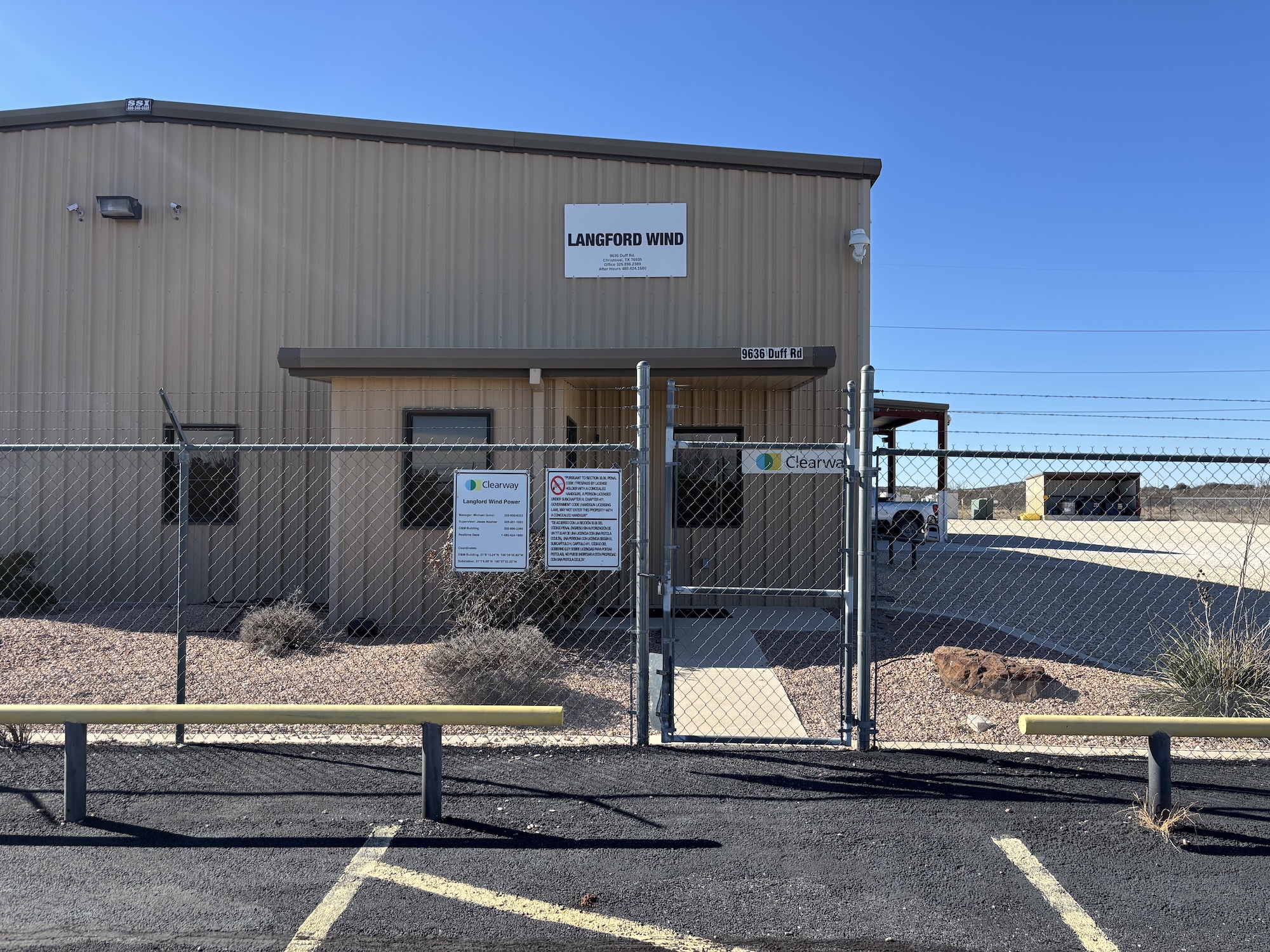
Renewable energy has offered modest relief. The 160-megawatt Langford wind farm, which extends into Schleicher County from an adjacent county, came online the same year Bradley took office, providing a small cushion amid the losses; it now pays the county about $35,000 annually. The 100-megawatt Live Oak wind farm was built in 2018; over the past six years, it has contributed nearly $16 million in taxes to local governments, including $7.2 million to Bradley's budget. A 430-megawatt solar farm under construction nearby could add roughly $225,000 to his budget each year.
Still, Bradley remains realistic about green energy's limitations. Several companies have signed agreements without ever breaking ground, and those that did haven't replaced what oil and gas once provided. The projects employ only a handful of workers — nothing like the numbers the oilfield service yards and gas plants once did.
The modest financial gains have sparked tension. Some ranchers, weary of what Bradley called "scraping out a living on six inches of topsoil and rock," welcome the money clean energy developers pay to lease their land. They also hope the revenue might help Schleicher County avoid the fate of neighboring Menard County, one of the state's poorest. Others resent having their tax dollars fund federal incentives for what they call "alternative energy." Bradley said he's been asked, "Why in the hell do we want all that stuff? This is ranching land, and it's always been ranching land."
The conflict intensified in 2023, when ETFuels began leasing rights for a 500-megawatt wind, solar, and battery complex that would also produce hydrogen to make methanol for shipping — a larger and more complex industrial project than anything Schleicher County had seen. For many residents, the issue wasn't the scale, but the water. The plant would draw from the Edwards-Trinity Aquifer, the county's only source, and no one could say how much could be safely extracted. The first exploratory wells came up dry; later ones struck water. The question packed the civic center with tense meetings. But under state law, Bradley had no authority to intervene in the landowner's drilling. "I can't tell him what to do with his land," he said.
ETFuels never broke ground, but something even larger emerged. In December 2024, Apex Clean Energy pitched a wind, solar, battery, and "green" hydrogen facility that would generate enough energy to power 700,000 homes and create 90 full-time jobs. This time, the water would come from another county. A presentation outlining the benefits left school board members speechless: The operation would deliver as much as $1.2 billion in property tax revenue over 25 years, including $20 million annually for the school district, enough for a new elementary school. In November, the board put a bond package before voters, hoping the Apex project would fund it. (The measure ultimately failed.)
Apex appears to have abandoned plans to produce hydrogen in Schleicher County, though the reason remains unclear. The company, which declined to comment, last promoted the project in June, just before President Trump signed the "One Big Beautiful Bill Act" into law. Among other provisions, that legislation rolled back the production tax credit of up to $3 per kilogram for clean hydrogen. Experts like Rhodes at the University of Texas doubt many such projects can survive without it.
Bradley won't speculate about lost or future revenue. "That egg is not in my basket," he said. What is in his basket lies just beyond his office window: an elementary school with a leaky basement, two men mowing all the county's grass, and a community that's spent decades waiting for something to take root.
If Bradley can see the changes that have come to Schleicher County in recent years, Sandra Pfeuffer can hear them. The sound carries across ranchland where her family once expected only the lowing of cattle.
Her father-in-law leased wind rights on his ranch in Eden, a town in neighboring Concho County, to a renewable energy company in 2008. He did so, Pfeuffer said, because he was dying, and paying estate taxes would have required selling off part of the ranch. Nothing came of the deal, but a decade later, her husband Ray signed a lease with Maverick Creek Wind Farm, which was built in 2020. "It was the worst decision we ever made," Sandra said.
The four turbines hummed so loudly, and the transmission line buzzed so persistently, that she couldn't sleep during visits. "I'm not going to lie — mailbox money is great," she said. "But the mailbox money will never cover the loss of the enjoyment we had in that ranch."
Pfeuffer is now fighting the rising tide of clean energy developments in eastern Schleicher County, where she lives. She isn't blind to the irony of her position. Ranches are dividing all around, she concedes, and times are changing. But she has come to see such projects not as progress but as a threat to the only life she's wanted. "As a rancher, I feel kind of like a quail," she said. "Everything's after you, and it's only a matter of time 'til you die."
When ETFuels began drilling wells on her neighbor's land in 2023, she led the charge against it. She worried about what might be lost beneath the surface. "My fence doesn't go underground and separate your water from my water," she said. "It's wrong for my neighbors to pump half a million gallons a day and cut my water away from underneath me." (A representative of ETFuels told the county's water board it could use about 220,000 gallons per day.)
The next year, the Pfeuffers gathered fellow ranchers around their dining table and formed the Edwards Plateau Alliance to "counteract misleading narratives" about renewable energy. Sandra organized meetings, brought in outside critics, and pressed lawmakers to protect groundwater from hydrogen development. "[Companies] go into communities that need a lifeline and they promise the world," she said. "The money is not worth the peace and beauty that they take away from your property."
Standing on their 3,300-acre ranch, it's easy to understand what Sandra Pfeuffer thinks is threatened. A few miles past the turnoff, a handmade sign declares: "Wind Turbines Destroy Land Value." Past the white farmhouse and its network of gates, rocky pastures unfold beneath scattered live oaks and the occasional oil pumpjack. Sandra stopped her ATV beside one of the pumps and cut the engine. No mechanical whoosh or hum—just wind moving through prairie grass.
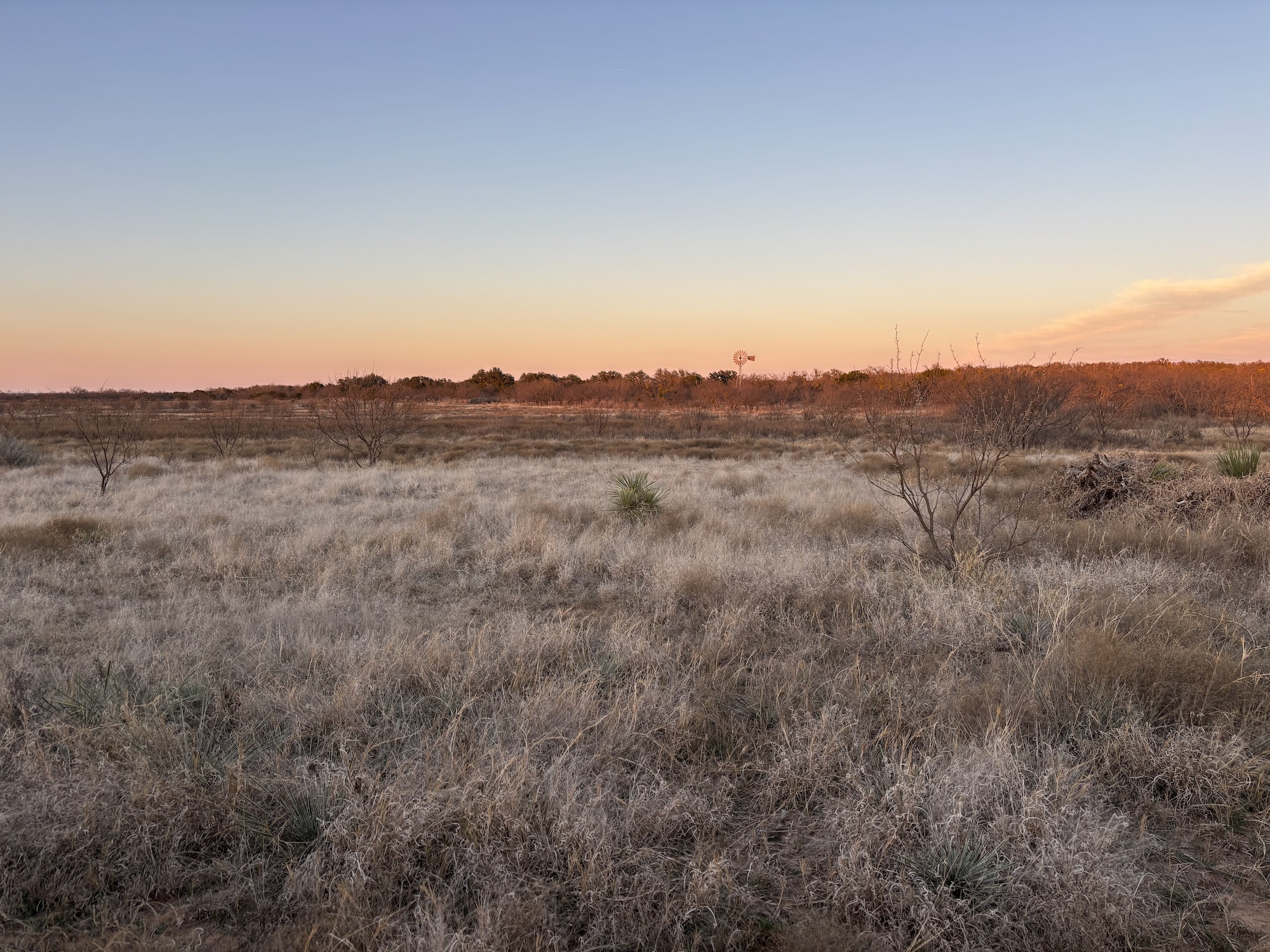
That silence is part of why the Pfeuffers fight so hard for this place. They've spent years clearing mesquite and cedar to let native grasses return—not purely for economics, Sandra said, but for the land itself. The work has sharpened her awareness. "Out here, you're so connected to everything," she said. "If there's a rock out of place, you notice."
She sees no such care in the renewable energy push. To Sandra, it's extraction by another name—an industry that will drain West Texas dry, leaving behind concrete foundations, steel rebar, and fiberglass waste. What galls her most is the sense that urban planners are forcing their priorities onto rural communities that will bear the lasting costs. "I don't come into town and knock down your buildings so I can run my cows," she said.
Their opposition has created rifts. Sandra said a neighbor stopped speaking to her. She's heard whispers of intimidation, coffee shop talk along the lines of, "These people fighting this—we know where they live."
Meanwhile, in Austin, the conflict gets translated into spreadsheets and load projections. State officials say Texas faces a straightforward supply problem: Electricity demand is surging due to population growth and an explosion of data centers, even as extreme weather events stress the grid. The Electric Reliability Council of Texas, which oversees roughly 90 percent of the state's power, projects peak demand will jump from 85 gigawatts to 150 by 2030. To handle that load, the state is constructing a $33 billion transmission network—2,500 miles of high-voltage lines connecting West Texas generation to urban centers like Dallas.
When Pfeuffer discusses these plans, her tone sharpens. "Texas is so unique," she said. "Do we really want to destroy it with power lines, wind turbines, solar panels? One day we're going to wish we hadn't."
The future she dreads is already taking shape. A 200-mile transmission corridor could cut through eastern Schleicher County, close to her property. More routes may follow. The momentum feels unstoppable. "I have to wonder," Pfeuffer said, "if I'm ever going to sleep again."
The noise and disruption that swept through Duff Hallman's ranch in 2009 are distant memories now. What remains are reliable payments that help offset ranching's climbing costs. Annual expenses have reached as high as $217,000. Lease income—Hallman declined to specify exactly, but hinted at roughly $200,000 per year, divided among him and his two siblings—provided crucial support during the brutal droughts of 2011 and 2021, when withered pastures forced them to sell their herd. Still, Hallman harbors no illusions about the scale. "Is it like having oil?" he asked. "No. Not anywhere close."
When other ranchers consider leasing their land for turbines, Hallman tells them he barely registers their presence anymore. His sole gripe: the massive icicles they occasionally fling during ice storms. Otherwise, he's satisfied. Clearway Energy, which operates the Langford wind farm, maintains the towers and after construction paid for lost trees and reseeded disturbed areas—courtesies Hallman said oil and gas operators never extended. The access roads now serve as firebreaks. Driving along one in his pickup, he gestured at the landscape. "These hills are rough and rocky," he said. "I haven't lost that much."
Yet his endorsement doesn't always sway skeptics, particularly those convinced turbines crater property values. He laughed at the notion. "I bet you we could get top dollar for our ranch," he said.
Hallman acknowledged that the solar installation going up nearby gives him second thoughts. He could earn modest income grazing sheep under the panels, but he worries about impacts on wildlife and the ecosystem he's cultivated with help from a biologist. He shares the broader wariness about transmission lines and data centers, and was among those who refused to let ETFuels tap his water, choosing instead to preserve it for future generations.
Renewables have sustained the ranch financially, but he recognizes the land may not remain in the family indefinitely. Each generation multiplies the heirs, fragmenting ownership and diluting historical connection. Change is unavoidable. Eventually, the steel towers will disappear, replaced by technology he can't yet envision. Hallman shrugged and smiled at the prospect. "I don't know what that's going to be, but it's going to be something pretty 'wow,'" he said. "We're only limited by our imaginations."
This story was originally published by Grist with the headline Texas saw a $50B future in clean energy. Then the political winds shifted. on Mar 31, 2026.